In Tinton Falls, the hours right after a fire decide whether soot etches surfaces permanently and whether the wet structure starts to mold. We deodorize the ductwork and air handler too, since a fire-affected HVAC redistributes smoke smell long after the surfaces are clean. A Monmouth County fire often involves shared walls, so we treat the whole envelope the smoke could have reached. The full extent — char, soot travel, and suppression water — is recorded and delivered as one organized packet. Dial 551-237-7440 and we mobilize a Monmouth County team fast.
Why Smoke Reaches Rooms The Fire Never Touched
Heat warps and melts past the burn zone while smoke chases every cool surface it can reach. Smoke molecules bond to porous materials at the molecular level, which is why air freshener and ozone sprays only mask the odor until they fade.
Our crew secures the structure, pulls the water the fire crew left, and cleans soot from the surfaces it actually reached — not just the obvious ones. We document the burn area, the smoke migration, and the water damage separately so the claim reflects all three.
What It Takes To Clear The Smell
If the smoke smell came back weeks after the work, the odor was masked, not removed. We remove the source residue first, then use thermal fogging or hydroxyl treatment to neutralize what is bonded into porous materials.
We do not upsell a duct replacement the system does not need, and we do not skip one it does. That sequence is the difference between a fire job that holds and one that has the owner calling back.
The Soaked Structure Under The Soot — What To Know
Putting out a house fire takes a great deal of water, and all of it ends up in the structure as a second loss. The water carries soot deeper into porous materials, so leaving it in place spreads the contamination further.
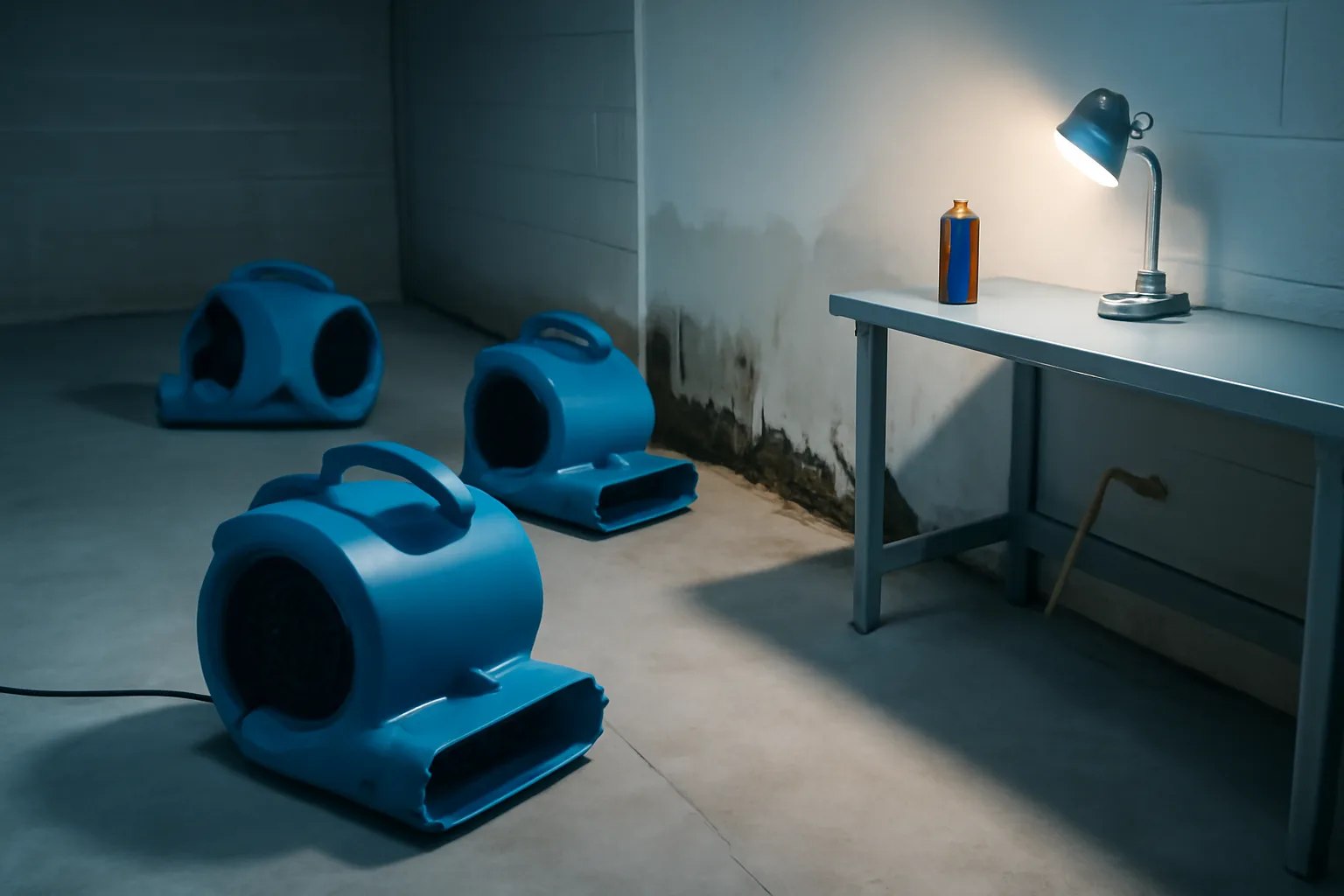
Our crew pulls the water the fire left, sizes drying equipment to the saturation, and tracks the dry-down to standard. Getting the moisture out fast is the unglamorous part of fire recovery, and it is the part that prevents the callback.
After the flames are out, the recovery is partly a water-damage job, because suppression water is everywhere it reached. A fire loss dried to standard closes cleanly; one left damp reopens as mold behind the freshly cleaned walls. We dry by the numbers even on a fire loss, because a structure that reads wet is a structure that is still at risk. Drenched framing in a cold-season loss starts growing mold fast, which is why we dry while we clean rather than after.
Why We Treat Residue Immediately — A Straight Answer
The longer soot sits on a surface, the more likely the damage becomes permanent rather than cleanable. Surfaces that could have been wiped clean on day one often need refinishing or replacement by the end of the week.
We move fast on soot precisely because the residue is corrosive, treating it before it etches anything permanently. Getting on the residue early is the cheapest version of fire cleanup, and the version that saves the most.
What the fire spared, the soot can still claim, because acidic residue keeps working on surfaces over the following days. The sooner the residue is treated, the more of the home is cleaned rather than refinished or replaced. The team neutralizes the acidity and lifts the residue by the right method for each surface in the home. The acidity means a delay of days turns a cleaning job into a refinishing job on the same surfaces.
How We Sort Salvage From Loss — The Short Version
What is inside the home — furniture, clothing, keepsakes — is part of the loss and part of the recovery. The pack-out gets fragile and salvageable contents out of the work zone so they are not damaged further during restoration.
The contents inventory becomes part of the claim file, so the belongings are supported as fully as the structure. Handling contents in-house means there is no separate restoration vendor for the adjuster or the owner to coordinate.
The belongings in a fire-damaged home need as much careful handling as the structure around them. Handling contents in-house means there is no separate restoration vendor for the adjuster or the owner to coordinate. The contents inventory becomes part of the claim file, so the belongings are supported as fully as the structure. Salvageable items are inventoried, packed out, and cleaned off-site while the structure is restored, then returned.
How this fits the bigger recovery
Property losses in {city} tend to bleed across categories — fire damage restoration often overlaps with basement flood cleanup, storm damage restoration, mold remediation, biohazard cleanup, structural rebuild, and it all stays with one accountable crew. We carry the identical standard to and everywhere else across Monmouth County.
If you searched for a restoration crew near you, Whichever you need, you have a documented, photo-backed crew on your side, and we document it from hour one. Call 551-237-7440 any hour, read Preventing Mold After Water Damage in Tinton Falls on our blog, or head back to our Tinton Falls home page to see everything we do.